
US President Donald Trump on Thursday announced that Israel and Lebanon have reached an agreement to initiate a 10-day ceasefire, following intensified diplomatic efforts to reduce hostilities in the region.

China is mediating talks between Pakistan and Afghanistan to address their ongoing military conflict, following Pakistan's operation against terrorist hideouts in Afghanistan and UN reports questioning Pakistan's evidence of militant presence in Afghanistan.

China's Foreign Ministry has refuted allegations of providing military support to Iran, warning the US against imposing tariffs based on these accusations. The statement follows reports of Iran acquiring a Chinese satellite for targeting US military bases. Meanwhile, a rescheduled meeting between Presidents Trump and Xi Jinping is set for May.

India and the US are reportedly exploring a potential meeting between Prime Minister Narendra Modi and US President Donald Trump on the sidelines of the G7 summit in France next week, aiming to rebuild bilateral ties after recent tensions.
Pakistan claims significant casualties inflicted on Afghan Taliban operatives during a recent military operation along the border, while diplomatic efforts are reportedly underway to find a negotiated solution.

Prime Minister Narendra Modi and US President Donald Trump exchanged pleasantries and held a brief conversation at the G7 summit, their first in-person encounter in 16 months, setting the stage for high-stakes bilateral talks amidst continuing strain in India-US relations.

Speaking to reporters aboard Air Force One, Trump said the US prefers a negotiated settlement and expects cooperation from Iran on securing nuclear-related materials.

The US Central Command (CENTCOM) confirmed striking the Guinea-Bissau-flagged oil tanker MT Jalveer, carrying 20 Indian seafarers, in the Gulf of Oman for allegedly violating the US blockade against Iran. This incident marks the third commercial vessel attacked by US forces in the region this week, with three Indian seafarers previously losing their lives in an attack on the MT Settebello.

Iranian President Masoud Pezeshkian has confirmed Tehran's participation in Pakistan-facilitated peace talks with the US in Islamabad, according to Prime Minister Shehbaz Sharif. This development follows a conditional ceasefire agreement and aims to address regional tensions.

Foreign Ministers from Pakistan, Saudi Arabia, Turkiye, and Egypt convened in Antalya to explore avenues for enhanced cooperation across various sectors of mutual interest, reaffirming their commitment to regional peace and stability.

Prime Minister Narendra Modi voiced concern over reports of the targeting of Russian President Vladimir Putin's residence and urged Russia and Ukraine to focus on diplomatic efforts to end hostilities.

Tensions escalate between Iran and the US over control of the Strait of Hormuz, a crucial shipping lane for global oil supplies, as both sides discuss extending a fragile ceasefire.

US President Donald Trump has indefinitely extended the ceasefire with Iran at the request of Pakistan, aiming to allow Tehran's leadership time to form a unified proposal to end the seven-week war.

Pakistani Prime Minister Shehbaz Sharif is actively engaged in diplomatic efforts to de-escalate tensions in West Asia, offering to host talks between the US and Iran and engaging with regional leaders to promote peace and stability.

Pakistan has increased security measures in Islamabad and surrounding areas as the US and Iran prepare for another round of peace talks. The move follows an announcement by former US President Donald Trump that American negotiators would be in Pakistan for discussions aimed at resolving the conflict between the two nations.

US President Donald Trump threatened to bomb Iran if a deal is not reached before the ceasefire ends, while Pakistan urged both sides to extend the truce and pursue diplomacy.

Prime Minister Narendra Modi convened the Cabinet Committee on Security to address the impact of the West Asia conflict on Indian citizens, focusing on safeguarding them from the conflict's effects and ensuring the smooth flow of essential supplies.
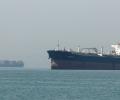
A high-stakes memorandum for a 60-day ceasefire between the United States and Iran is in its final stages, with negotiators working to close remaining gaps and avert further escalation in the region, including reopening of the Strait of Hormuz and the resumption of Iranian oil sales, according to an Axios report citing US officials.

Pakistan is playing a key role in facilitating talks between the US and Iran, but the future of these negotiations remains uncertain. Despite ongoing diplomatic efforts, no dates have been set for a second round of discussions.

Ebrahim Azizi, head of Iran's National Security Committee, stated that diplomatic talks with the US are governed by national interest and security, viewing negotiations as an extension of military efforts.
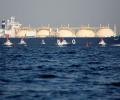
Iranian Deputy Foreign Minister Kazem Gharibabadi has urged India to take the lead in bringing peace to West Asia, highlighting the UAE's role in stalling BRICS consensus on the conflict. Gharibabadi also discussed a new framework with Oman for merchant vessels passing through the Strait of Hormuz.

The United States Central Command (CENTCOM) has announced that American forces are maintaining a strict maritime restrictive operation in the region, continuing to enforce a blockade against Iranian ports.
A Sri Lankan court has imposed an overseas travel ban on former president Gotabaya Rajapaksa and two former military officers in connection with ongoing investigations into the 2019 Easter Sunday attacks. The ban was issued after the Criminal Investigation Department (CID) raised concerns that their flight could hamper the probe into the coordinated suicide bombings that killed 270 people. The current government reopened the investigation in late 2024, alleging political influence led to an earlier cover-up.

US President Donald Trump is considering ending the military operation against Iran even if the Strait of Hormuz remains closed, according to the Wall Street Journal.

Iran has reimposed restrictions on the Strait of Hormuz, with its forces opening fire on a passing tanker and forcing at least two Indian vessels to reverse course, escalating tensions in the region and raising concerns over energy supplies.

US Secretary of State Marco Rubio will visit India for four days to strengthen bilateral relations, holding talks with Indian leaders and attending the Quad foreign ministers' meeting.

The Beijing summit may have reduced immediate diplomatic uncertainty, but it did not resolve the deeper structural contest between the United States and China. That contest appears likely to define the coming decade, notes Varun Arya.

A top Iranian intelligence official was killed in an attack, with the Revolutionary Guard blaming the United States and Israel. The incident occurs amid escalating regional tensions, including IDF strikes on Hezbollah infrastructure and ongoing operations in Lebanon.

US Vice President J D Vance is expected to travel to Islamabad for peace talks with Iran to end the seven-week war, amid a fragile ceasefire and ongoing tensions.

Donald Trump issued a fresh warning to Iran as negotiations remained deadlocked over uranium stockpiles, sanctions relief and war compensation. The US President's sharp remarks came just hours after Iranian media revealed Washington's core conditions for resuming negotiations.

The Quad grouping has expanded cooperation in critical minerals and energy, while unveiling new measures to boost maritime surveillance and port infrastructure across the Indo-Pacific. This move comes against the backdrop of China's growing military posturing in the region, with ministers reiterating strong opposition to destabilising actions and expressing serious concerns over militarisation of disputed features.

US Secretary of State Marco Rubio arrived in Kolkata for a four-day diplomatic tour to India, marking the first visit by a US secretary of state to the city in 14 years. His itinerary includes meetings with Indian officials, energy talks, and a Quad Foreign Ministers Meeting.
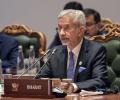
India has expressed serious concerns about the West Asia crisis and its potential impact on energy supplies and maritime stability, urging BRICS nations to find practical solutions to geopolitical challenges and unilateral sanctions.
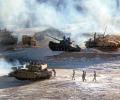
While tensions have eased at several friction points and mechanisms for managing the boundary have been reactivated, underlying differences persist. Disputes over naming practices in Arunachal Pradesh, continued infrastructure development on both sides, and unresolved questions regarding patrolling rights indicate that the structural gap remains, notes Dr Kumar.

Adviser to Prime Minister on Foreign Affairs Sartaj Aziz said that hectic diplomatic efforts were made to inform the world leaders about Pakistan's position on the NSG entry.

'If the new regime in Kabul wants diplomatic recognition, or to unlock the billions that are currently frozen, they will have to ensure safe passage for those who wish to leave the country, to respect the rights of women and girls, to prevent Afghanistan from, again, becoming an incubator for global terror, because that would be disastrous for Afghanistan'

An Indian worker from Odisha was killed and two others were injured in a drone attack by Ukraine in the Moscow region. The deceased, A Rameya, was working at an oil refinery. Efforts are underway to repatriate his body.

Iran's ambassador to India, Mohammad Fathali, has described India as a "reliable and compassionate" partner while asserting Tehran's territorial authority over the Strait of Hormuz amidst ongoing regional tensions.

Donald Trump has issued a stern warning to Iran regarding alleged fees imposed on tankers passing through the Strait of Hormuz, further escalating tensions amid fragile ceasefire agreements and ongoing disputes with Israel over Lebanon.

NCP (SP) president Sharad Pawar has acknowledged that despite political differences with Narendra Modi, the prime minister is working to uphold India's prestige internationally. Pawar emphasised the importance of collective effort for national interest and cited examples of past leaders who prioritised the country's reputation.
